Measure the frame as it stands when correctly assembled. Record width, depth and overall height separately, with units beside every number. A stretched or torn old cover is a poor substitute for a frame measurement.
1. Check the frame first
Make sure you are measuring a complete, correctly assembled structure. Look for an unseated joint or a visibly bent section before using its dimensions to choose a cover. Follow your model’s assembly instructions rather than forcing a damaged frame into a new shape.
2. Measure the three main dimensions
- Width: left to right across the outside of the front face.
- Depth: front to back along the outside of a side face.
- Overall height: from the base to the highest point of the roof, not just to the top shelf or roof edge.
For an uneven outline, note the widest or deepest outside point as well as where you measured it. Keep the tape straight. Repeat each measurement once and resolve any difference before writing your final record.
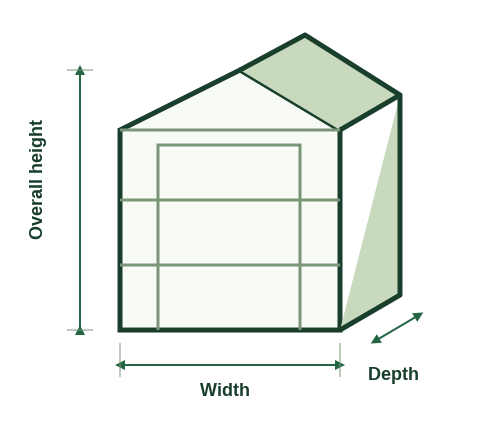
3. Record the details the three numbers miss
Sketch the roof profile. Note whether it is peaked, curved or slopes against a wall. Record the door’s side, width and height, plus vent locations and attachment points. For a sloped roof, write both the high and low side heights in your notes.
4. Read the seller’s dimension labels
Our comparison uses width × depth × height. A supplier may write height × width × depth instead. Match labels, not positions. Also check whether a table describes the cover itself or the greenhouse model it is intended for.
5. Ask about fit before ordering
Do not add an invented allowance and treat it as a universal rule. Ask the supplier what their stated dimensions mean and whether the cover is intended for your model. Save your measurements in the worksheet to include with that enquiry.
Sources
Manufacturer listings checked 27 November 2026. Recheck the current variant before ordering.
Next step
Record your frame measurements · Compare listed sizes · Check before ordering